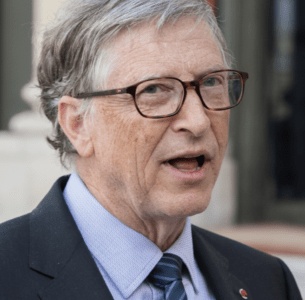
A Department of Energy letter obtained by a U.S. senator confirms it. Bill Gates held a Q clearance from June 11, 2014, until December 6, 2021. That is more than seven years of eligibility for some of the most sensitive nuclear-related information the United States possesses. He is a private citizen. He has never held elected office or a Senate-confirmed government position. The public still has no complete official account of why the clearance was granted or precisely why it ended.
Fantastic explainer here.
Gates, a private citizen, had “Q” level clearance, which is equal to a Department of Defense Top Secret clearance and is required to handle sensitive nuclear weapons data and Restricted Data. Was this for DARPA? And why? This was long before COVID-19. https://t.co/JMsLMwI8Fz
— Senator Rand Paul (@SenRandPaul) August 22, 2026
What a Q Clearance Actually Is
A Q clearance is the Department of Energy’s highest personnel security authorization. It is treated as equivalent to a Department of Defense Top Secret clearance. It permits access, on a strict need-to-know basis, to Restricted Data under the Atomic Energy Act. That category covers the design, manufacture, and use of nuclear weapons, the production of special nuclear material, and related energy applications. It also covers other classified national security information when the holder’s duties require it.
The clearance does not give automatic access to every nuclear secret. Need-to-know still applies. But the background investigation and adjudicative standards are the same level required for people who work directly on weapons design, national laboratories, and critical nuclear infrastructure. Most people who hold one are government employees, contractors at the labs, or military personnel assigned to nuclear missions. Private citizens without a direct operational role are rare.
Bill Gates held a top secret Q Clearance for 7 years, through the entire pandemic. He’s not an elected official. He’s not a scientist at NIH. He’s just a very wealthy private citizen who helped shaped the government’s COVID response.https://t.co/EAAlYr9bEH
— Rand Paul (@RandPaul) August 6, 2026
Where Gates Got It
The DOE letter states the clearance was “reciprocally granted.” That means the Energy Department accepted an existing Top Secret-equivalent clearance already issued by another federal agency rather than starting a brand-new full investigation from scratch. The letter does not name the originating agency.
Public reporting from the mid-2000s noted that Gates and then-Microsoft CEO Steve Ballmer held Defense Department Top Secret clearances. Those were tied to Microsoft’s extensive classified work with the government. By 2013 Gates was deeply involved with TerraPower, his advanced nuclear reactor company. That October he toured the Materials and Fuels Complex at the Idaho National Laboratory. DOE itself publicized TerraPower’s multiple Cooperative Research and Development Agreements with the lab. Seven and a half months later the reciprocal Q clearance was issued. The timing lines up with a private citizen needing access to classified nuclear technology information for a company working with DOE facilities.
No public document has detailed the exact projects or briefings that required the higher nuclear-specific access. Reciprocity itself is standard government practice when someone already holds an equivalent clearance. The opacity is what stands out: a billionaire philanthropist with a nuclear energy side project received it, kept it for years that included the entire COVID period, and the originating agency remains unnamed in the released letter.
Why He No Longer Has It
The same DOE letter states the authorization was terminated on December 6, 2021. Clearances end for several routine reasons: the underlying need-to-know disappears when a project or role ends, a periodic reinvestigation turns up issues, the holder no longer requires access, or an adjudicative decision is made. DOE has not released a public explanation of which factor applied here.
Gates stepped back from day-to-day Microsoft involvement years earlier and focused on philanthropy and TerraPower. By late 2021 any formal requirement tied to specific lab agreements or classified briefings may simply have expired. There is no public evidence the clearance was revoked for cause involving misconduct. There is also no public evidence it has been reinstated.
Bill Gates has no elected office, yet he keeps experimenting with our food, our health, and the natural world.
His foundation funds genetically modified mosquitoes released to crash insect populations. Similar tech has been tested on ticks. The stated goal is to cause the spread… pic.twitter.com/j1wL1bxwpS
— Patricia 🇺🇸 (@1109Patricia) August 23, 2026
The Unanswered Questions
A private citizen held eligibility for Restricted Data for seven years. The government confirmed the dates only after a formal congressional request. It still has not named the agency that performed the original background investigation or described the precise need-to-know that justified elevating a software billionaire into the nuclear clearance system. That lack of transparency is the problem. Security clearances exist to protect national secrets, not to create quiet special access for influential private actors. When the details stay buried, the public is left to wonder whether the system works for the country or for the well-connected. The letter exists. The full story still does not.